Ownership
Who owns what, end to end?
An ownership model where every capability, service, and outcome has a name attached.
- Capability and service ownership
- Decision rights
- Escalation paths that do not route through founders
For teams that have worked together for years but where progress feels slow and messy. We install the operating system: ownership, cadence, quality gates, and a straight line of sight from strategy to sprint to release.

We keep hiring developers and somehow we’re getting slower.
Each initiative negotiates its own rituals, tools, and definitions. Nothing compounds.
Shipping requires heroics, freezes, and a war room. The team has learned to dread its own deployment day.
Leadership sets direction, sprints fill with tickets, and nobody can trace one to the other.
Velocity charts go up and to the right while stakeholders ask why nothing they care about has shipped.
Standards exist in some heads and some repos. First-time quality is a lottery.
A team that has worked for years without compounding is almost never a talent problem. It is a systems problem: unclear ownership, uncontrolled work-in-progress, invisible queues, and quality checked at the end instead of built in. We install the operating rhythm that makes good work the default, then transfer it so it keeps running without us.
One rhythm from strategy to release, with quality gates as checkpoints, not afterthoughts.
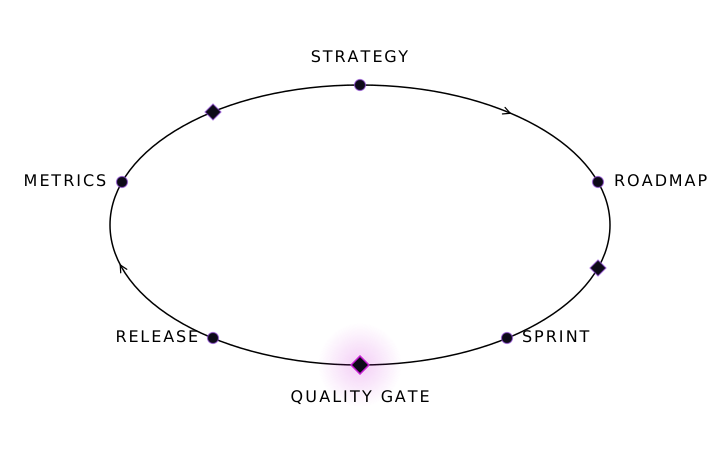
This is the system we install: one rhythm from strategy to release, with quality gates as checkpoints instead of afterthoughts.
Who owns what, end to end?
An ownership model where every capability, service, and outcome has a name attached.
How does work flow?
Delivery cadence and rituals that control work-in-progress and make queues visible.
What is the standard?
Quality gates, review discipline, and pipeline hygiene that make first-time quality normal.
Where work waits, where it bounces back, where quality escapes. Measured, not assumed.
Weeks 1-2
Ownership model, cadence, quality gates, and the metrics that matter: first-time yield, system availability, work-in-progress.
Weeks 2-6
We run the rituals alongside your leads until the rhythm is theirs, adjusting the system to your reality instead of a textbook.
Weeks 4-8
Playbooks, documentation, and a leadership dashboard. You keep the gains, not a dependency.
Final phase
Including the operating metrics: first-time yield, system availability, work-in-progress.
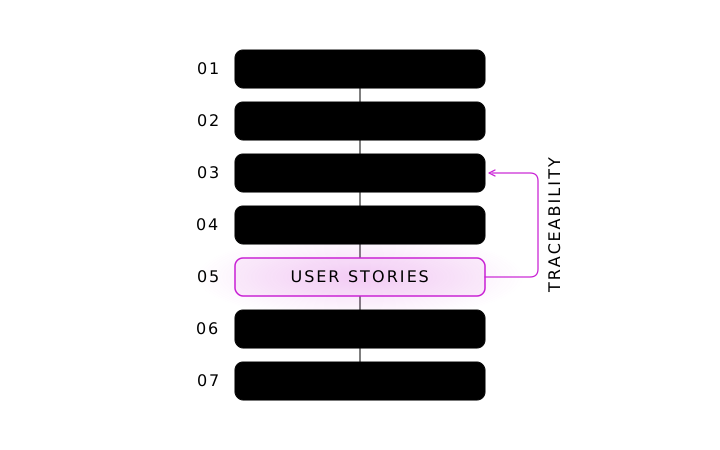
the traceability ladder
The deliverables snap into this ladder, so every ticket in a sprint can be traced back to the idea — and the reason — it came from.

CEO & Engineering Leader
10+ years in engineering leadership. CEO of Intelvision, a software engineering company that has delivered 100+ software products for startups and scale-ups.
Yurii built the Strike Team model around one standard: senior ownership, strong architecture, and predictable execution. He ensures every engagement aligns technical decisions with real business outcomes, not just velocity, but impact.

Strike Team Lead
20+ years in technology delivery and transformation. PMP and Lean Six Sigma Master Black Belt.
Wayne has scaled global engineering organizations (7 to 85 across 35 countries), built delivery systems with measurable performance metrics, and reduced cost of poor quality by up to 80%. He brings structure, accountability, and operational clarity to projects that have gone off the rails, and turns chaos into controlled delivery.
Impact:
Impact:
Impact:
It is the way your organization turns strategy into shipped software: ownership model, delivery cadence, quality gates, and a traceable line from business goal to sprint to release. We install it as a working system, not a slide deck.
It is almost never the people — it is the system: unclear ownership, uncontrolled work-in-progress, invisible queues, and quality checked at the end instead of built in.
Control work-in-progress, make queues visible, set a release cadence, and add quality gates as checkpoints. Predictability is a property of the system, not of individual effort.
Through a traceability ladder: ideas → opportunities → capabilities → features → user stories → sprints → releases. Every ticket can be traced back to the reason it exists.
Releases become fear events when quality is inspected at the end. We install definition of done, PR discipline, CI/CD hygiene, and rollback safety so releases become routine.
We do not install a framework by the textbook. We diagnose where work waits and quality escapes — measured, not assumed — then install a rhythm adjusted to your reality and coach it into habit.
The ones that reflect value, not activity: first-time yield, system availability, and work-in-progress — plus strategy-to-release traceability for leadership.
Weeks 1–2 diagnosis, weeks 2–6 installing the rhythm, weeks 4–8 coaching it into habit, then transfer with playbooks and a leadership dashboard.
The opposite. The system removes negotiation overhead — every project stops reinventing its own rituals, and engineers spend more time building and less time coordinating.
Playbooks, documentation, operating metrics, and leads who run the rituals themselves. You keep the gains, not a dependency.
We usually start with advice. You get a direct answer on whether we can help and what should happen first.
Talk to an expert
Yurii Kotula
CEO and Engineering Leader
Your first call is with Yurii. Send the form, or pick a time in his calendar.
Book a call with Yurii