
Outsourcing App Development Cost in 2026
What's new: New rate and project cost data, real budgets from our case studies, EU accessibility rules, hidden running costs, a section on AI-assisted development, a step-by-step estimate and an FAQ.
Summarize with AI
Read summarized version with AI
- Clutch's 2026 pricing data puts the average app project at $90,780 over about 11 months, but most reviewed projects cost $10,000 to $49,999.
- Accelerance's 2026 rate trends put senior developers at $64 to $76 an hour in Europe, $60 to $75 in Latin America and $31 to $41 in Asia, all slightly down on the year.
- Real budgets from our case studies range from USD 20k+ for a three-month MVP to EUR 400k+ and EUR 600k+ for complex, long-running mobile platforms.
- Team shape and scope drive cost more than the hourly rate: start with a short discovery phase and a strict MVP, and add 15 to 25% contingency.
- Budget for running costs too: store accounts and commissions, hosting and third-party services, yearly OS updates, accessibility and security work.
By outsourcing app development, you can shorten time to market, control project costs and get skills your in-house team does not have. What you cannot do is get a reliable price without understanding what drives it. Two apps that look similar in a pitch deck can differ in cost by a factor of ten once integrations, offline mode, compliance and the team's seniority are counted.
This guide explains outsourcing app development cost in 2026: current hourly rates by region, what typical projects really cost, the factors that move the budget, hidden and ongoing costs, how AI-assisted development changes the numbers, and a step-by-step way to estimate your own app. Where we use our own projects as examples, the budgets are the ones published in our case studies.
How much does it cost to outsource app development in 2026?
The short answer: most outsourced app projects fall between $10,000 and $50,000, but the average is far higher because complex products pull it up.
Clutch, the B2B review platform, publishes pricing data from verified client reviews. Its 2026 mobile app pricing guide, updated in September 2026, reports:
- An average app development project cost of $90,780.
- An average timeline of about 11 months, at an average of $8,188 a month.
- Most reviewed projects in the $10,000 to $49,999 range.
- A typical hourly rate of $25 to $49 for app development companies, with little difference between Android, iOS and cross-platform work.
Those averages hide a wide spread. Real budgets from our own published case studies show it:
| Project | What was built | Team | Duration | Published budget |
|---|---|---|---|---|
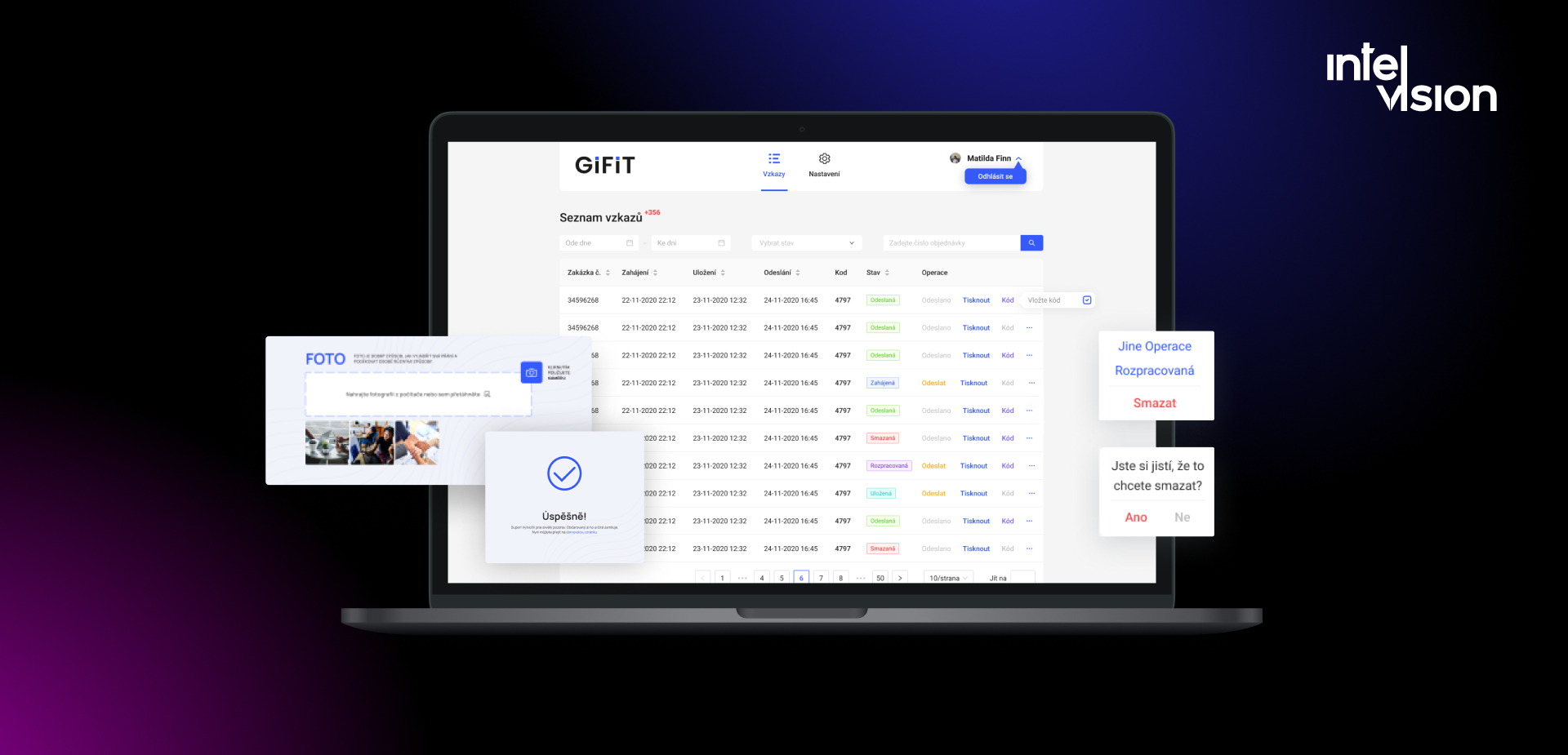
| GiFiT (Czech Republic) | E-commerce gifting MVP with personalized video and photo messages delivered through a QR code, integrated CRM | Back-end and front-end developers, PM, DevOps engineer, QA engineer | 3 months (MVP) | USD 20k+ |
| Get Worker (Croatia) | Web and mobile HR app for a construction company: vacation requests, days off, schedules, Airtable integration | Mobile developer, back-end developer, QA, PM/BA | 3 months | EUR 30k+ |
| Vaillant | Internal mobile and web order management system with CRM integration, PDF reporting and push notifications | Full-stack developer, mobile developer, QA, PM | 3 months | EUR 100k+ |
| Vehicle diagnostics platform (Western Europe) | Mobile-first platform with live OBD-II and CAN bus data, dashboards and cloud-synced reports | Mobile developer, back-end engineer, QA engineer, product designer, delivery manager | 1 year | EUR 400k+ |
| National utility company (DACH) | GPS-enabled field operations app that generates compliance documentation from field data | 2 mobile developers, back-end engineer, QA, BA, delivery manager | Ongoing | EUR 600k+ |
The pattern is consistent: an MVP with a small team for about three months sits in the tens of thousands; an internal business app with integrations reaches six figures; a product with hardware connectivity, multiple user roles and ongoing development runs to several hundred thousand euros over its life.
Benefits of outsourcing mobile app development
In 2009 Apple advertised the iPhone 3G with the slogan "There's an app for that". Today there really is an app for almost everything, in every industry: real estate, construction, healthcare, retail, finance and education. The demand for experienced app developers has grown with it, and that is why so many companies outsource part or all of their app development.
If you delegate a simple app, a complex mobile product or app maintenance to an outsourcing partner, you get these advantages.
Saved time
You do not spend months hiring, training and retaining an in-house team. You get developers who have already built apps with a similar tech stack and know the development process. In our Get Worker project, time to hire averaged 18 days and the app went from onboarding to release in 2 months.
A wide range of skills
A good development company can provide every role an app needs: mobile and back-end developers, UI/UX designers, QA engineers, DevOps and business analysts. You can bring in a specialist for a few weeks, such as a security tester before launch, without hiring one permanently.
Evidence before you commit
When you outsource app development, you can check reviews of your potential partner before signing. Browse platforms such as Clutch, read the partner's case studies, ask for references and talk to previous clients. That gives you more evidence about a vendor than you usually have about a new hire.
Predictable cost
You pay for the work, not for recruiting fees, office space, equipment, benefits or idle time between projects. With the right pricing model, which we cover below, you can cap your exposure or scale the team up and down with your roadmap.
Outsourcing app development rates by region
Hourly rates are the most visible part of outsourcing app development cost. They fell slightly in 2025. Accelerance, which tracks software outsourcing rates, reported in its 2026 rate trends (published November 24, 2025) that average rates dipped in every major outsourcing region, pointing to competition, automation and AI-augmented developers.
| Region | Junior developer (USD per hour) | Senior developer (USD per hour) | Change in 2025 |
|---|---|---|---|
| Europe | $31 to $39 | $64 to $76 | Down 4.4% |
| Latin America | $33 to $45 | $60 to $75 | Down 7.1% |
| Asia | $24 to $31 | $31 to $41 | Down nearly 8% |
Accelerance does not split its Europe figures into Eastern and Western Europe, but notes that downward pressure was especially strong in Central and Eastern Europe.
For comparison, the median annual pay of a software developer in the United States was $135,980 in May 2025, according to the US Bureau of Labor Statistics. That is roughly $65 an hour across 2,080 working hours, before employer taxes, benefits, equipment, office space and recruiting fees. An in-house hire also costs money during the months it takes to find them.
Three cautions when you compare rates:
- Seniority mix matters more than the rate. A team of juniors at a low rate often costs more per finished feature than a smaller senior team.
- Technology matters. Niche skills, such as Bluetooth hardware integration, real-time data streaming or applied AI, cost more everywhere.
- Time zone matters. A team with little overlap with your product owner may need more written specification and more management time, which is a cost you pay too.
Factors that influence outsourced app development cost
The main concern in any project is an accurate estimate. The cost of an outsourced app breaks down into three broad factors: features and complexity, the size and make-up of the team, and the team's rates. Rates we covered above. The other two need a closer look.
Features and complexity
What should the app do? It sounds like a simple question, but a clear description of the necessary features is the foundation of a good estimate. Clear requirements also mean less time lost on misunderstandings and features nobody needs.
The features that move a budget the most:
- Integrations. Payments, CRM and ERP systems, identity providers and third-party APIs. Each integration adds design, development, error handling and testing, and some depend on the other system's documentation and sandbox quality.
- Offline mode and synchronization. Apps that must work without a connection and sync later, like the order-taking app we built for Posude, need conflict handling and careful testing.
- Media and real-time data. Video upload and streaming, live dashboards, chat or hardware data over Bluetooth.
- User roles and permissions. An app with admins, managers, field workers and customers is several apps sharing one codebase.
- AI features. Search, assistants, document processing or recommendations add data preparation, evaluation and a running cost per request.
Complexity does not only come from features. It also comes from regionalization, cross-platform compatibility, analytics and regulation. In the EU, two rules deserve a line in every estimate:
- Accessibility. Under the European Accessibility Act, products and services placed on the market after June 28, 2025, including online shops, ticketing platforms and banking services, must meet accessibility requirements, according to the EU's Your Europe guidance. Service businesses with fewer than 10 employees and under €2 million in turnover are exempt. Designing for accessibility from the start costs far less than retrofitting it.
- Data protection. GDPR shapes how you collect consent, store personal data and handle deletion requests, and these flows need design and testing time.
Start with an MVP
Most successful apps start as a minimum viable product: a working, deliberately limited version that real users can try. Its job is to prove that people want the product and to gather feedback before you invest in everything else. Three of our published projects, GiFiT, Posude and Jincom, each reached their MVP in three months. Jincom's engagement then continued for 2.5 years, with a published 25% cut in development costs and 45% faster time to market. Our MVP and product development service is built around that sequence.
Native, cross-platform or web app: how the choice affects cost
The platform decision is one of the biggest cost levers, and it is made early, often before anyone has estimated anything. There are four realistic options.
Two native apps
Separate apps in Swift for iOS and Kotlin for Android give the best access to device features and the most platform-typical behavior. They also mean two codebases, two sets of developers and most features built and tested twice. Choose this when the app lives on device capabilities, such as advanced camera use, demanding graphics or deep integration with the operating system.
One cross-platform app
React Native, Flutter and .NET MAUI let one team ship iOS and Android from a shared codebase, with native code only where it is needed. For most business apps this is the most cost-effective choice. Several of the mobile apps in our case studies were built this way: Get Worker, the national utility field app and the vehicle diagnostics platform use React Native, and earlier projects such as Posude and Vaillant used Xamarin, the predecessor of .NET MAUI.
A web app or progressive web app
If users mostly work at a desk, or the app is mainly forms, lists and dashboards, a responsive web app may be all you need. One codebase, no store reviews and instant updates. The trade-off is weaker access to device features and less presence in app stores.
Web plus mobile
Many business products need both: a web admin panel for office staff and a mobile app for people in the field. Budget for both from the start, because the admin side is often forgotten in first estimates and can be as large as the app itself.
Whatever you choose, keep the back end and the API independent of the client. That way a later move from web to mobile, or from one framework to another, does not mean rebuilding the business logic.
The team you are paying for
When people think about app outsourcing, they think about developers: Android, iOS, cross-platform or full-stack. Developers are only part of the team. Most apps also need project management, design, analysis and quality assurance, and every role is part of the cost.

Project or delivery manager
A good project manager keeps the work moving. They handle communication between developers and the client, turn priorities into a plan, and raise problems early. You usually need one person as the main point of contact, often part-time on a small project. You can assign someone from your own staff, or have the partner provide one who knows the team's working style.

UI/UX designer
Users expect an app to be easy and intuitive. You could save on design, but you might end up with a confusing app that people abandon after the first session. Our vehicle diagnostics platform project, whose team included a product designer, raised the app's rating from 3.2 to 4.6 across app stores and increased customer retention by 24%, as published in the case study.
Business analyst
Business analysts are often the first people you talk to. They help you decide on requirements, prepare the MVP feature list and turn ideas into acceptance criteria, which is what makes an estimate reliable. On small projects the analyst and project manager roles are often combined.
Developers
Developers are the core of any app. You will always need at least one experienced engineer who can make architecture decisions and handle the hard technical problems. The rest of the team can mix seniority levels. This is a balancing act between quality and cost, but not every app needs to be perfectly polished in its first version.
QA engineer
Testing on real devices, regression testing before each release and test automation. Skipping QA is the most common false saving we see: defects found by users cost far more than defects found by testers.
DevOps engineer
Build pipelines, app store releases, cloud infrastructure and monitoring. Usually part-time, but essential if you want frequent, reliable releases.
Typical team shapes from our case studies: a lean MVP with one full-stack developer and one QA engineer (Posude); a four-person team of full-stack developer, mobile developer, QA and PM for an internal business app (Vaillant); and a six-person team with two mobile developers, a back-end engineer, QA, a business analyst and a delivery manager for a large field operations app (national utility company).
Average cost of application development by complexity
With rates and team shapes in place, here is how app budgets usually group by complexity. The examples are our own published case studies; the Clutch figures come from its 2026 pricing guide.
| Complexity | Typical scope | Typical team and duration | Budget reference |
|---|---|---|---|
| Simple app or MVP | A few core screens, one user role, basic back end, one or two integrations | 2 to 4 people, about 3 months | Most projects on Clutch: $10,000 to $49,999; GiFiT MVP: USD 20k+; Get Worker: EUR 30k+ |
| Medium complexity | Several user roles, payments or CRM integration, admin panel, notifications, reporting | 4 to 5 people, 3 to 6 months | Vaillant internal order management system: EUR 100k+; Clutch average project: $90,780 |
| Complex or enterprise | Hardware or IoT data, real-time features, offline sync, compliance, many integrations, continuous development | 5 to 6 or more people, a year or longer | Vehicle diagnostics platform: EUR 400k+; national utility field app: EUR 600k+ |
Remember that you can expand an app after launch. If the first version needs more features or new integrations later, they can be added in the next releases. You do not need to aim for everything in version one. Build on user feedback and let the team scale the app as requirements change. If you are unsure what your app will cost, we can give you a free cost estimate.
How to estimate your app budget, step by step
You do not need a final specification to get a useful estimate. You need a structured way to turn an idea into a range. This is the process we use with clients.
- Write down the business outcome. What should the app change, and how will you measure it? Fewer manual steps for field staff, a new revenue channel, faster order processing. This keeps the scope honest.
- List the users and their top tasks. Each user role with the three to five things it must do. This is your first feature list.
- Cut to an MVP. Mark each feature as must-have for launch or later. Be strict.
- Choose platforms. iOS, Android, web or all three. Cross-platform frameworks such as React Native, Flutter or .NET MAUI usually cost less than two separate native apps; fully native development makes sense for heavy device integration or demanding performance.
- Map integrations and constraints. Every external system, every regulatory requirement (accessibility, GDPR, industry rules) and any offline or hardware needs.
- Run a short discovery phase. A few weeks with a business analyst, designer and senior engineer to produce clickable prototypes, an architecture outline and a backlog with estimates. It is the cheapest way to reduce the uncertainty in everything that follows.
- Build the team-month model. Team size times months times blended monthly rate. Then add 15 to 25% contingency for what discovery could not foresee.
- Add the running costs. Hosting, third-party services, app store fees, monitoring and the maintenance team after launch.
A worked example
To show how the model works, here is an illustration using rates based on the European ranges reported by Accelerance, not a quote. A lean MVP team of one senior developer at $70 an hour full-time, one junior QA engineer at $35 an hour half-time, and a project manager at $50 an hour for a quarter of the time comes to about $16,000 a month at 160 working hours per month ($11,200 + $2,800 + $2,000). Over three months that is about $48,000 before contingency, which sits close to the top of the range where most Clutch-reviewed projects fall. Add a designer for the first month and a second senior developer, and the same MVP quickly passes $80,000. Team shape, not the hourly rate, is the biggest lever you control.
How to compare app development quotes
When you ask three vendors for a quote, you will often get three numbers that differ by a factor of two or three. Usually they are not quoting the same thing. Before you compare prices, compare what is behind them.
- Scope assumptions. Ask each vendor to list the features, platforms and integrations the price includes, and what is explicitly excluded. Missing admin panels, analytics and store release work are common gaps.
- Team and seniority. Ask for the named roles, seniority levels and the share of time each person spends on your project. A low quote with a part-time junior team is not cheaper per feature.
- Discovery and design. Is UX design included, or only implementation of your designs? Is there a discovery phase, and what does it produce?
- Quality assurance. How much testing is included, on which devices, and is there test automation? A quote without dedicated QA time is missing a cost, not avoiding it.
- Change handling. On fixed-price quotes, how are change requests priced? On time and materials, how will you see budget burn each week?
- Warranty and support. How long are defects fixed free of charge after launch, and what does ongoing support cost?
- Ownership. Do you get the source code, design files, infrastructure access and documentation from day one, with intellectual property assigned to you?
- Use of AI tools. Which AI tools the vendor uses on your code, how the output is reviewed, and whether your code may be sent to external model providers.
Then ask for one thing that is hard to fake: a similar project the team has delivered, with a client you can speak to. Published case studies with real team sizes, durations and budgets, like the ones in the table at the top of this article, tell you more about a vendor's estimates than any proposal.
Hidden and ongoing costs to budget for
The development invoice is not the full cost of an app. These items are often missing from first budgets:
- App store accounts. The Apple Developer Program costs 99 USD per membership year, and a Google Play Console account has a one-time US$25 registration fee.
- Store commissions. If you sell digital goods or subscriptions in the app, both stores take a share. Apple's Small Business Program offers a reduced 15% commission for developers with up to 1 million USD in annual proceeds. Google Play has no single service fee: in markets still on the older structure, developers in the 15% tier pay 15% on their first $1M of revenue each year and 30% above it, while Australia, the EEA, Japan, the UK and the US moved to a new fee structure in 2026. Check the current terms for the markets you sell in.
- Cloud hosting and third-party services. Servers, databases, file storage, push notifications, maps, analytics, email and SMS, and AI model usage. These grow with your users.
- Maintenance. Every year Apple and Google release new operating system versions and update store requirements, and libraries need security updates. An app with no maintenance budget slowly stops working.
- Security and compliance work. Penetration testing before launch, accessibility audits, privacy reviews and documentation for enterprise customers.
- Your own team's time. Product ownership, reviews and acceptance testing on your side are real costs, even when no one invoices them.
How AI-assisted development changes app development costs
AI coding tools are now standard. The 2025 DORA report found that 90% of respondents use AI at work and more than 80% believe it increased their productivity. Some vendors now promise apps at a fraction of the old price because "AI writes the code". The evidence is more mixed.
- In a controlled experiment published in 2023, developers with GitHub Copilot completed a task 55.8% faster than those without it. The task was writing an HTTP server in JavaScript, a well-defined greenfield exercise.
- In a 2025 randomized study by METR, experienced open-source developers took 19% longer to complete real issues in large codebases they knew well when using AI tools, although they believed AI had made them about 20% faster.
- METR's February 2026 follow-up concluded that developers are probably more sped up by AI tools in early 2026 than a year earlier, but that its data is only very weak evidence for how much.
- In the 2025 Stack Overflow survey, 66% of developers named "AI solutions that are almost right, but not quite" as their biggest frustration.
What this means for your budget:
- AI cuts the cost of some work. Prototypes, boilerplate, standard screens, unit tests and documentation get cheaper. Accelerance names AI-augmented developers as one of the reasons outsourcing rates fell in 2025.
- AI does not remove the expensive parts. Discovery, design decisions, integrations with real systems, security, testing on devices and production support still take experienced people.
- Review becomes the bottleneck. Ask a vendor how AI-generated code is reviewed and tested, not only which tools they use.
- Be wary of headline savings. A quote that is half the market price because of AI usually means less review, less testing or less senior oversight.
Our own hiring follows the same line: a current engineering vacancy of ours asks for confident daily use of AI coding tools and states that the engineer stays responsible for the correctness, testing and quality of the result. That is the standard to ask any partner for.
Choosing a pricing model
There are three common ways to pay for outsourced app development. Each suits a different level of certainty.
| Pricing model | How it works | Best for | Risk to watch |
|---|---|---|---|
| Fixed price | Agreed scope, price and deadline | Small, well-defined apps or a clearly specified MVP | Every change becomes a change request; vendors add a risk premium |
| Time and materials | You pay for the hours worked, planned in short iterations | Products where requirements will change as you learn from users | Needs active product ownership and budget tracking on your side |
| Dedicated team | A stable team works only on your product for a monthly fee | Long-running products and continuous development after launch | Works best with a clear roadmap and a product owner who can keep the team busy with the right work |
A fixed price only works if you have a well-defined product. You agree on scope, price and deadline, and the partner takes on the delivery risk, which is why fixed prices include a buffer.
Time and materials works with an agile approach. Each iteration produces a working version, and you can change the plan when circumstances change or assumptions are proven wrong. Deadlines are less fixed, but the end product usually fits users better.
A common and sensible combination: a fixed-price discovery phase, then time and materials or a dedicated team for development. Our pricing page explains how we structure engagements.
Common mistakes that inflate outsourcing costs
- Skipping discovery. The first month of development discovers what discovery should have, at a higher price.
- Choosing the lowest hourly rate. Cheap teams that need constant supervision and produce rework are the most expensive option.
- Building everything in version one. Every feature you add before launch delays the feedback that tells you which features matter.
- Underestimating integrations. The other system's API is rarely as clean as its documentation.
- No QA budget. Bugs found in production cost more to fix and cost you users.
- No owner on your side. Decisions that wait a week cost a week of team time.
- Forgetting the run costs. Hosting, store fees and maintenance continue for as long as the app exists.
Why outsource app development to Eastern Europe
For European companies, Eastern Europe combines senior engineering talent with little or no time difference. Ukraine, Poland and Romania are among the main hubs. Ukraine's IT industry kept growing during the war: IT exports reached $6.66 billion in 2025, up 3.3% on 2024, according to Lviv IT Cluster figures reported by dev.ua.
Engineers from the region are known for strong technical foundations, good English and direct communication, which suits product teams in Germany, Austria, Switzerland and the Nordics. When you compare vendors, ask about business continuity as well as rates: backup power and connectivity, distributed teams and replacement guarantees.
Intelvision is a European software engineering company working with more than 50 companies across Europe. We hold a 5.0 rating on Clutch from 14 verified reviews and have delivered more than 100 software products. Our mobile developers work inside your tools and routines, and our published projects range from three-month MVPs to multi-year product partnerships.
What to do next
Outsourcing app development is a practical way to get a high-quality app to market faster than hiring a full team yourself. It suits start-ups, mid-sized companies and enterprises alike. The final cost depends on the app's complexity and features, the size and seniority of the team, and the rates of the region you hire in. Most of all, it depends on the decisions you make before development starts: a clear outcome, a strict MVP, a short discovery phase and a partner whose estimates you can check against published work.
Sources
- Mobile App Pricing Guide 2026 (Clutch)
- 2026 Outsourcing Rate Trends: Asia, Europe, LATAM (Accelerance)
- Software Developers, Occupational Outlook Handbook (US Bureau of Labor Statistics)
- Services, goods and their digital accessibility (Your Europe, European Union)
- Apple Developer Program: what's included (Apple)
- Get started with Play Console (Google)
- App Store Small Business Program (Apple)
- Service fees (Google Play Console Help)
- Announcing the 2025 DORA Report (Google Cloud)
- The Impact of AI on Developer Productivity: Evidence from GitHub Copilot (Peng et al., arXiv 2023)
- Measuring the Impact of Early-2025 AI on Experienced Open-Source Developer Productivity (METR)
- We are Changing our Developer Productivity Experiment Design (METR, February 2026)
- Stack Overflow Developer Survey 2025: AI
- Ukrainian IT exports returned to growth in 2025 (dev.ua, February 2026)
Read Intelvision often? Add us as a preferred source in Google Search.
Add to preferred sources